How to Actually Grow a Type Beat Channel on YouTube (Without Burning Out)
Most producers think growing a type beat channel is about making better beats. It's not.
The channels sitting at 100K, 500K, or 1M subscribers didn't get there because their 808s hit harder. They got there because they figured out how YouTube actually works and built a system around it. The producers still stuck at 50 views per video are still trying to figure out why quality alone isn't enough.
This guide is about the system.
First: YouTube Is a Search Engine, Not a Stage
This is the single thing most producers misunderstand. Instagram rewards followers. TikTok rewards virality. YouTube rewards search intent.
The majority of your views will come from people who've never heard of you, they type "Rod Wave type beat 2025" into the search bar, and either your video shows up or a competitor's does. That's the game. Everything else in this guide is about making sure yours shows up.
Step 1: Pick One Niche and Own It
Uploading trap beats, lo-fi, R&B, drill, and afrobeats on the same channel feels like a smart move. More variety, more reach, right?
Wrong. YouTube's algorithm learns what your channel is about by watching what your viewers search before landing on your content. When your channel covers 6 genres, the algorithm can't classify you so it stops recommending you to anyone.
Pick one primary niche. Dominate it. Then expand.
Strong niches right now:
Dark melodic trap : high search volume, passionate audience
UK/NY Drill : fast-growing, global fanbase
R&B / Neo Soul : underserved, buyers are loyal
Afrobeats : one of the fastest growing genres globally
Lo-fi hip hop : evergreen, massive playlist ecosystem
Once your channel consistently appears when people search your target genre, you've earned the right to branch out.
Step 2: Use Data to Find Niches Before They Get Crowded
Gut instinct is fine when you're starting. But if you want to actually scale, you need to know which artist names are being searched, how competitive each keyword is, and where the gaps are.
This is where Typeflick's Niche Finder comes in. Instead of spending hours cross-referencing YouTube search volumes manually, it tells you:
Search volume by artist and style
Competition scores per keyword
Opportunity ratings : niches with real demand and almost no competition
A practical example: an R&B producer might discover that "SZA type beat" is completely saturated, but "Cleo Sol type beat" or "Sampha type beat" has solid search volume with barely any competition. That's a lane you can own right now. One smart bet like that can drive thousands of views from a single upload.
Use the Niche Finder before your next session, not after. Let the data shape what you make, not just how you label it.
Step 3: Volume Is Non-Negotiable
Here's the uncomfortable truth: volume wins. The channels dominating YouTube search have hundreds, sometimes thousands, of videos. Every video is a permanent entry point into your channel, a 24/7 salesperson that never sleeps, never gets tired.
The minimum viable schedule is 3–5 videos per week. The producers growing fastest are publishing daily.
That sounds like a fast track to burnout and it is, if you're spending 2–3 hours per video on post-production. Before tools like Typeflick, publishing one type beat video meant opening After Effects for the visualizer, Photoshop or Canva for the thumbnail, then doing manual SEO research just to write the title, description, and tags. At 5 videos a week, that's 10–15 hours of work that has nothing to do with making music.
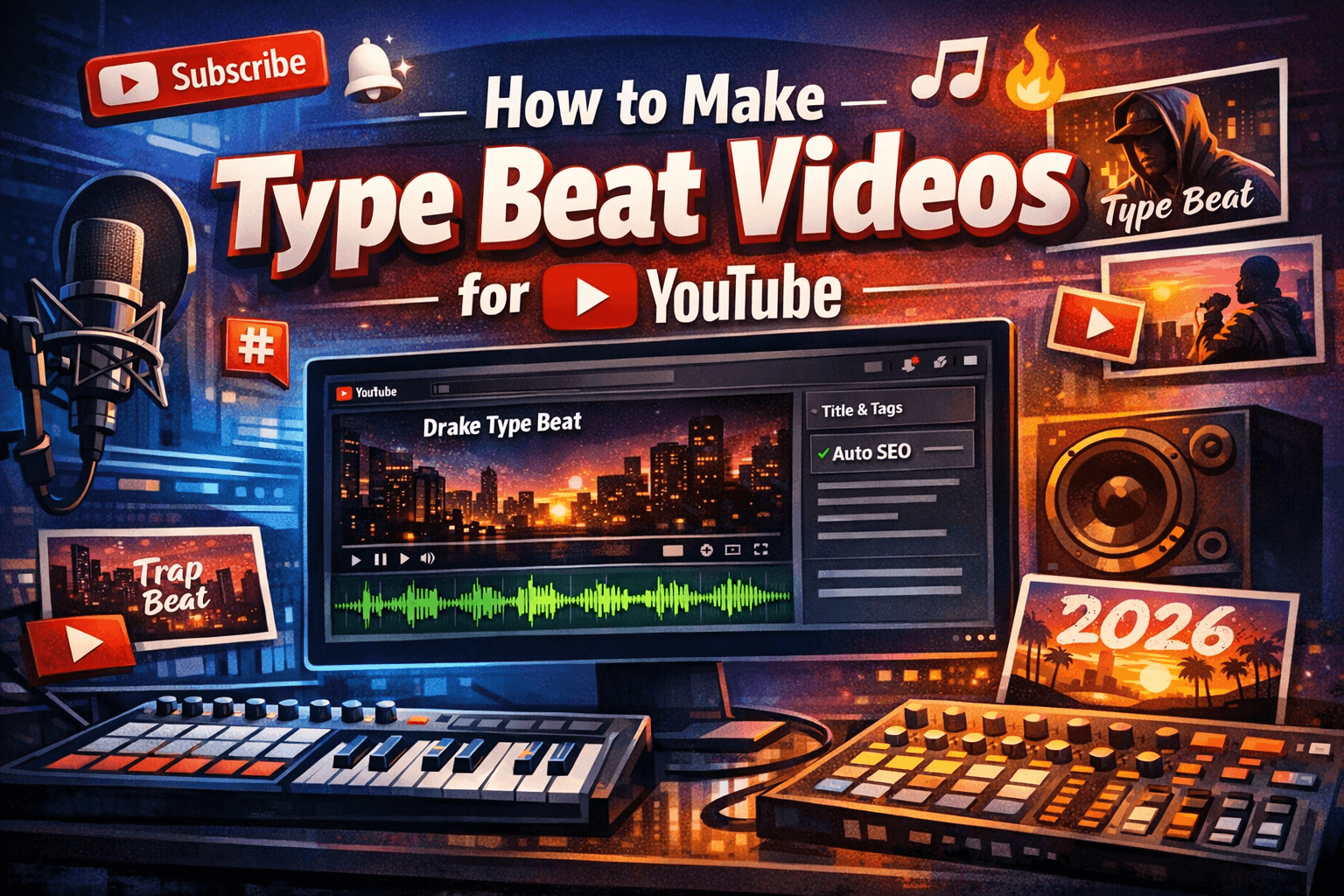
With Typeflick, the workflow is: upload your audio, approve an AI-generated thumbnail, publish with automated SEO metadata. Takes minutes. That means even a solo producer working a full-time job can realistically maintain a daily upload schedule without losing their mind.
Consistency also signals to YouTube that your channel is worth promoting. Channels that post sporadically get buried. Channels that post daily get a compounding boost over time.
Step 4: Get Your SEO Right From Day One
Great beats with bad SEO get zero views. Mediocre beats with great SEO get thousands. That's not cynical it's just how search engines work.
Titles
Your title is your most important SEO signal. Format it like this:
[Artist Name] Type Beat [Year] | "[Beat Title]" | [BPM] BPM
Example: Rod Wave Type Beat 2026 | "Healing" | 75 BPM
One primary artist, maybe a secondary one. Don't stuff 5 artist names into the title it looks spammy and dilutes your keyword relevance.
Descriptions
Write 200–400 words minimum. Include the beat name, genre, mood, licensing links, your contact email, relevant keywords used naturally, and a CTA for artists to reach out.
Tags
Use all 500 characters YouTube gives you. Layer artist tags, genre tags, mood tags, and technical tags. Typeflick generates all of these automatically based on your beat's style, so you're not spending 20 minutes on tags for every upload.
Thumbnails
A bad thumbnail suppresses clicks more than most producers realize. A clean, bold, genre-consistent thumbnail can double your click-through rate compared to a generic one.
Typeflick generates 3 AI thumbnail options per beat, each matched to the visual aesthetic of your genre dark and gritty for drill, warm and soft for R&B, minimal for lo-fi. No Photoshop skills required.
Step 5: Build Content Around Your Beats
The channels that grow fastest don't just upload beats they build an ecosystem of content that pulls people back to their main videos.
YouTube Shorts :Post 30–60 second clips of your beats. YouTube actively promotes Shorts to non-subscribers. A Short that lands can funnel thousands of new viewers to your full beat videos.
Playlists : Organize your beats by genre and mood. Playlists increase session time, and YouTube identifies your channel's subject matter more clearly when your content has structure.
Compilation videos : "5 Dark Trap Beats" or "R&B Instrumentals Mix 2025" style videos rank for different search terms, attract playlist curators, and push watch time up significantly.
Community posts : Use YouTube's Community tab to post polls, beat previews, and behind-the-scenes content. Keeps your subscribers engaged between uploads.
Step 6: Use Short-Form Platforms as a Discovery Layer
YouTube is your primary engine. Short-form platforms are where new people find you.
TikTok and Instagram Reels : 15–30 second snippets of your best-sounding moments. Add "Free for profit ↓" with a link in bio. Music communities on these platforms are massive, and beat snippets regularly go viral.
Twitter/X : The producer community is active here. Share your uploads, engage with artists, use hashtags like #typebeat and #producer.
Reddit : Subreddits like r/WeAreTheMusicMakers and r/makinghiphop let producers share their work authentically. Real engagement here builds real fans.
BeatStars / Airbit : Keep your beat store synced with your YouTube uploads. Artists who find you on these platforms often search for your YouTube channel to hear more.
Step 7: Let the Data Tell You What to Double Down On
After 30–60 days of consistent uploads, you'll have enough data to spot patterns. Open YouTube Studio and look at:
Highest click-through rate : your thumbnail and title strategy is working. Replicate it.
Longest watch time : your sound is connecting. Make more of that.
Which search terms bring traffic : these are your most valuable keywords. Go deeper into those niches.
Which videos generate beat sales : double down on whatever genre those represent.
YouTube tells you what's working. You just have to listen.
Step 8: Don't Ignore the Community Side
New views matter. But keeping subscribers engaged is what builds a channel that lasts.
When someone subscribes, they want to hear more from you. Don't disappear on them. Respond to comments, maintain your upload schedule, and occasionally feature artists who've used your beats. That kind of genuine engagement builds fans who share your videos : the kind of organic growth no algorithm can replicate or take away.
What Happens When You Put It All Together
Five optimized beat videos a week : Typeflick handles the video creation and SEO in minutes. Shorts repurposing your best audio moments. The Niche Finder pointing you at high-opportunity keywords before they get crowded. Beat snippets going out on TikTok and Instagram. Monthly data reviews telling you what to double down on.
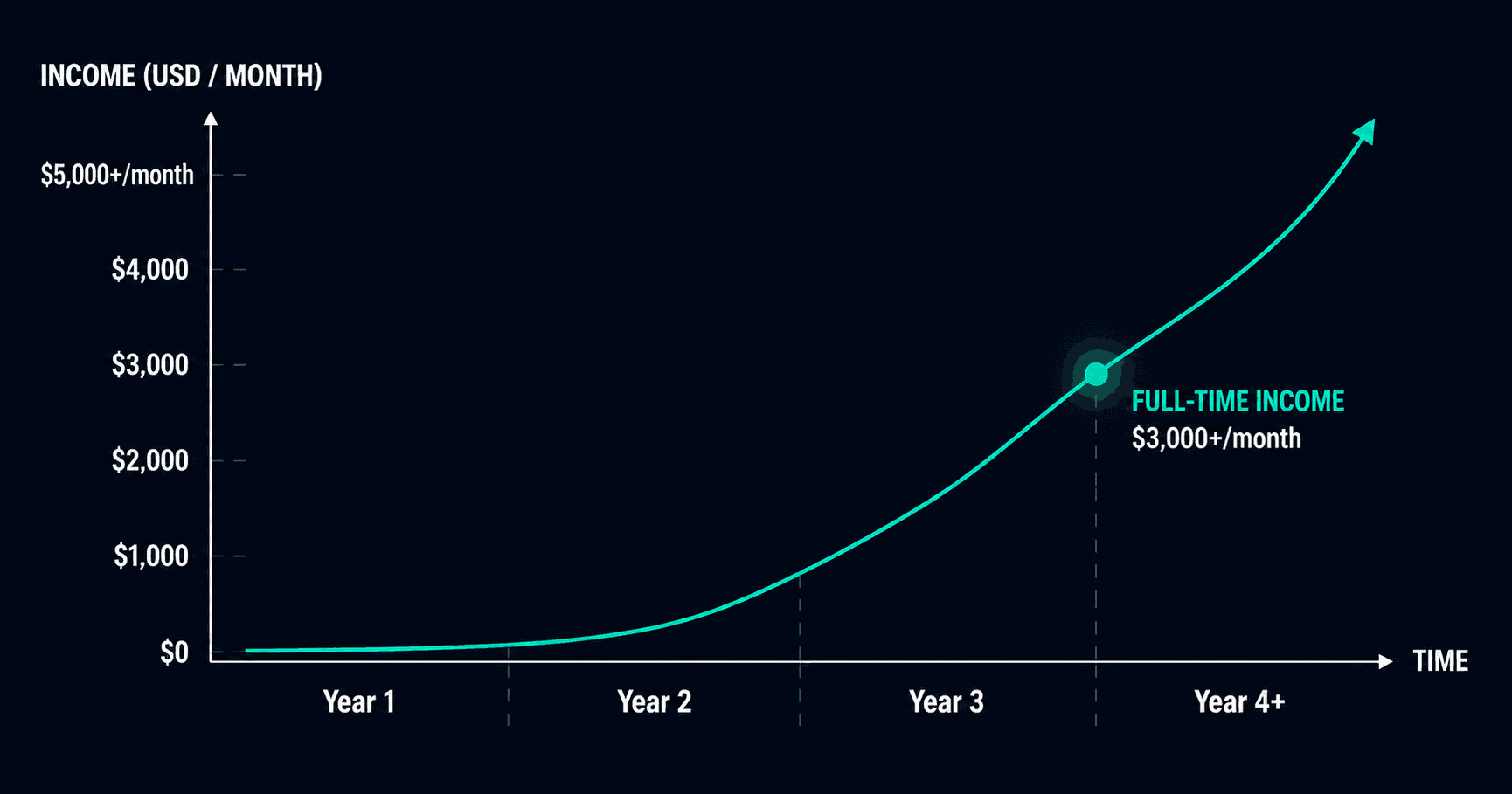
Six months of that, and you don't have a struggling beat channel. You have a beat business. Hundreds of videos indexed in search, daily passive views, consistent sales, and a growing community of artists who trust your sound.
The producers who fail on YouTube aren't the ones who make bad beats. They're the ones who post sporadically, ignore SEO, and never built a system. The system is the difference.
Build it, and the growth follows.
Tags: how to grow a type beat channel, type beat youtube growth, grow beat channel youtube, youtube for producers, type beat strategy, beat channel tips, typeflick, youtube algorithm type beats, how to get more views on type beats